A Quiet Conversation About Purpose, Meaning, And Destiny


“Why do deities need supernatural tricks: A Rebuttal

115898_twins_1One day twin brothers were having a quiet conversation, and the meaning of life came up.

What do you suppose it’s all about? the first brother asked.

It’s about getting what you can in the here and now, brother two answered. There’s nothing else after this.

Seriously? His brother wrinkled his brow. You mean, when we leave, we …

Go into oblivion. What else could it be? I mean, when you’re gone, you’re gone. If you go first, I won’t see you again and vice versa.

It all seems so pointless.

That’s why you have to make every minute count while you’re here. Grab what you can. Live for the moment. Eat and sleep like there’s no tomorrow, because there really might not be one.

I don’t know. I have this feeling that there’s more.

Crazy talk.

No. It’s talk that makes me think there’s more. I’ve heard things.

What kind of things?

You know, voices. One especially. Over and over I hear, ‘I love you boys.’

Your imagination.

I don’t think so.

Look around. You see any mysterious person who might be talking to us?

Well, no.

All right then.

But why couldn’t this person, you know, be somewhere else and when we leave here we join them there?

Because there is no other place.

How can you be sure?

Do you SEE another place?

Well, no.

Case closed. If you can’t see it, taste it, smell it, feel it, or taste it, then it doesn’t exist.

You said ‘taste’ twice and you left out hearing.

Do you hear anything now?

No.

All right then.

But I’ve told you, I hear this voice almost every day. Sometimes it even sings.

You’re losing it. And I’m stuck with a crazy for a brother.

Why is it so crazy to think there’s a world beyond the one we know?

Because you have no evidence, no proof.

I’m telling you, I do have proof. I’ve heard the voice of one telling me how much we’re loved.

That’s nothing but your wishful thinking tricking your mind into believing something that has no basis in fact.

How do YOU know there’s no basis in fact?

Show me this mysterious, invisible person. Where are they, huh?

Next time I hear their voice, I’ll wake you up.

Don’t bother. If I have a sour stomach, I can imagine things too. Hearing voices of invisible people is not proof.

Then what is?

How about an actual person, right in front of my face?

I don’t think it works that way. Somehow, I think we need to go to the I-love-you person, not the other way around.

You’re making this up.

No, actually I’m not. I’m on my way now.

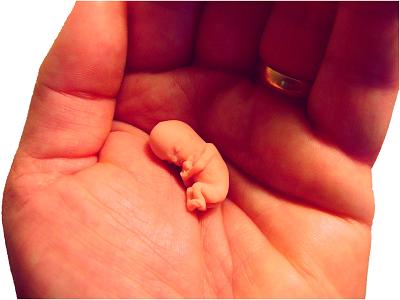
And with that the first of the twin boys was pushed through the birth canal and born.

Published in: on May 24, 2013 at 5:20 pm  Comments (1)  
Tags: , , , , , , ,

Who Defines Morality?


Gilbert_Stuart_Williamstown_Portrait_of_George_WashingtonPresident Obama’s administration has taken a few hits lately. One of the latest problems to come to light has to do with the IRS targeting for delays groups applying for non-profit status if they had a conservative moniker such as Tea Party.

As an aside, I find it interesting that “Tea Party,” associated with one of the brave acts of rebellion by the forefathers of the US in the process of gaining independence from England, has become a negative in the eyes of liberal Americans.

Maybe that isn’t so much of an aside. The question is, who defines morality? Once, standing up to a government that wasn’t really all that repressive, but was unilateral in its decisions, was thought to be a brave act worthy of acclaim.

Today, the group of people standing against a Big Brother type of all invasive government is ridiculed by the media and, in this latest Obama administration gaffe, targeted for unfair treatment by the IRS.

As it turns out, the President himself spoke out against this kind of unfair treatment. But the incident brings up the question, who gets to define morality? Those opposed to the Tea Party were making a decision based on what they believed to be right, I would have to assume. I mean, they were violating common practice if not legal precedent in targeting organizations with whom they disagreed. Who would do that unless they thought those organizations were wrong?

But do government officials get to define morality in this way? Do police get to target people because of their political views or religious persuasion? Some actually think they should–in light of terrorist threats.

How do we then keep government from going after those with whom they disagree, just as the IRS so recently did? This is the kind of action dictatorial regimes take.

No wonder President George Washington said in his farewell address

“Of all the dispositions and habits which lead to political prosperity, religion and morality are indispensable supports. . . . And let us with caution indulge the supposition that morality can be maintained without religion. Whatever may be conceded to the influence of refined education on minds of peculiar structure, reason and experience both forbid us to expect that national morality can prevail in exclusion of religious principle.”

How, President Washington seems to say, can morality exist apart from religion? How can political prosperity stand without the support of religion and morality?

Here we are in the twenty-first century, stripping religion from the marketplace of ideas, claiming that it has no place in government, and we find ourselves in a morass of immorality–or morality defined by one’s own ideas and beliefs.

How can we expect otherwise when we have stripped away any authority upon which morality is to stand? Why shouldn’t the anti-Tea Party IRS agent believe he is doing his nation a service by thwarting their processes? Who’s to say he is wrong? That is, if there is no authoritative, objective moral standard.

But if not from religion,from where does morality come?

Interestingly, Jesus was asked by the Jewish leaders of His day where He derived His authority. They wanted to trap Him and He would have none of it. But later, when he talked with His disciples, He let them know that what He said, He’d first heard from His Father. He was not making things up on the fly, not moving according to the whims of His own heart. He had an authoritative standard, established in conjunction with the Father and revealed by the Holy Spirit.

All this to say, the further government gets from religion, the weaker will be the grasp of morality. The latter will become a malleable thing, bent to the will of men and women in power, whether for good or ill, without any authoritative standard to guide it. Expect, then, more IRS-like scandals.

Missio Minded


Cades_Cove_Missionary_Baptist_Church_(2672713466)Don’t ask me why, but Latin is in for some reason–hence we’re talking about “missio” instead of mission at my church. But we’re just following a trend. There are a number of “missio” web sites, all focusing on what God has called the Church to do.

In many ways, I’m happy about that, but recently World Magazine raised the question whether or not this emphasis on “being the hands and feet of Jesus” might not be the new legalism (see “The New Legalism” by Anthony Bradley). That thought crossed my mind again this past Sunday.

Part of it has to do with the fact that some people link the Church to Pharisees, in essence saying their problems are the same ones we in the Church now have.

What were their problems? They were trying to deal with the “secularizing” of their religious society. They believed (at last) that they were to obey God’s Law, but in the process, they added their own interpretations. Those became traditional practices, enumerated and revered much the same as if they were God-given law.

In the end, the Pharisees clung to what they believed about the Law and they rejected the Messiah to which the Law pointed.

Is that like the Church? Uh, no. The Church is the gathering of people who accept Jesus as the promised Messiah, the Savior of the world.

True, we do believe we are to obey God’s Word, but not as a means to reach God but as a result of His having reached us.

It is also true that we may misinterpret what God requires of us. We are still sinful people with hearts bent toward pleasing ourselves. We still are susceptible to false teaching that tickles our ears.

As a result, we do constantly need to be called back to listen to the authoritative Word of God and to the Holy Spirit who will guide us into all truth.

But that’s the point. This new missio emphasis seems to miss the fundamental upon which our doing must be based. We must first hear the Word.

Jesus made this point several times. For example when He was told his family was outside, not being able to get past the crowd, He responded, “My mother and My brothers are these who hear the word of God and do it” (Luke 8:21). Notice, first we who are in His family must hear the Word.

The fact is, anyone who hears God’s Word will encounter what He says in the book of James:

But prove yourselves doers of the word, and not merely hearers who delude themselves. For if anyone is a hearer of the word and not a doer, he is like a man who looks at his natural face in a mirror; for once he has looked at himself and gone away, he has immediately forgotten what kind of person he was. But one who looks intently at the perfect law, the law of liberty, and abides by it, not having become a forgetful hearer but an effectual doer, this man will be blessed in what he does. (Jam 1:22-25)

Of course, this passage makes it clear that hearers are only fooling themselves if they don’t put legs to the Word.

James was not initiating some kind of new teaching. Rather, he was picking up on the theme Jesus had proclaimed:

“Therefore everyone who hears these words of Mine and acts on them, may be compared to a wise man who built his house on the rock. And the rain fell, and the floods came, and the winds blew and slammed against that house; and yet it did not fall, for it had been founded on the rock. Everyone who hears these words of Mine and does not act on them, will be like a foolish man who built his house on the sand. The rain fell, and the floods came, and the winds blew and slammed against that house; and it fell—and great was its fall.” (Matt. 7:24-27 – emphasis mine)

My point is this, the only way we know we are to act on God’s Word is by first hearing God’s Word. The measure, then, of those who actually are hearing God’s Word is the acting out of what they hear.

So maligning the Church for not being missio oriented is misplaced criticism. Those who are part of the Church that is truly hearing God’s word will already be doing. Those not hearing the Word, don’t need to be told to do–they need to be told to hear.

Those deluding themselves? No amount of prodding toward doing will make a difference. Those folks need to keep looking in the mirror of God’s Word and stop walking away.

I think that’s what’s happening to a lot of people who fill the pews on Sunday. They hear the Word proclaimed, then they go off and live Monday through Saturday without listening to so much as one word from God’s authoritative Scriptures. An hour on Sunday is not going to get the foundation of the house built.

So here’s the point. Anyone truly missio minded will first be Biblically minded. Doing starts with hearing.

Are We Paying Attention?


Oklahoma_TornadoAnother disaster hit mainland USA. No, it wasn’t of the epic proportions that Japan experienced in 2011 when a tsunami followed a devastating earthquake which triggered a nuclear crisis. But these natural disasters are adding up. Noticeably.

2012 147 died – Hurricane Sandy
2011 160 died – Joplin tornado
2011 346 died – Six state tornado outbreak
2011 20 died – Flood Mississippi River
2010 20 died – Flood Arkansas
2008 59 died – Five state Super Tuesday tornado outbreak
2007 14 died – California wildfires
2005 1,836 died – Hurricane Katrina

I could go on, but I think you get the point.

Add to these, school shootings and mall shootings and movie theater shootings and race bombings, and America is reeling. Or ought to be.

F4_tornado_damage_exampleThe latest disaster is the category F4 tornado that swept through Moore, Oklahoma yesterday, killing as many as 51 people, though most reports expect that number to rise, while wiping out blocks and blocks of homes. I mean wiping out.

I’ve seen earthquake damage and wild fire damage, and the pictures I saw of the effects of the Moore tornado were every bit as destructive.

Of course those who espouse global warming, also known as climate change, believe all these tragic events are caused by Mankind’s careless use of the environment. I have no doubt that we are to blame, but I think there’s something greater at work.

When Israel and Judah wandered away from God, He brought calamity on them for the specific purpose of getting their attention. He was calling them to repentance, warning them of judgment. When they continued to go their own way, He brought on them the disasters He’d told them about through His prophets.

Here’s one example from Jeremiah:

if that nation against which I have spoken turns from its evil, I will relent concerning the calamity I planned to bring on it…Behold, I am fashioning calamity against you and devising a plan against you. Oh turn back, each of you from his evil way, and reform your ways and your deeds. (18:8, 11b)

The devastation Israel and Judah faced included an earthquake, three and a half years without rain, famine, and multiple attacks from other nations.

Daniel summed up the Jewish people’s response to God’s efforts to bring them back to Himself:

As it is written in the law of Moses, all this calamity has come on us; yet we have not sought the favor of the LORD our God by turning from our iniquity and giving attention to Your truth. (Daniel 9:13)

Before I go any further, please understand, I am NOT saying the people of Oklahoma brought on this disaster because they were particularly sinful.

Jesus answered this very charge when His disciples asked Him about similar circumstances in their day:

Now on the same occasion there were some present who reported to Him about the Galileans whose blood Pilate had mixed with their sacrifices. And Jesus said to them, “Do you suppose that these Galileans were greater sinners than all other Galileans because they suffered this fate? I tell you, no, but unless you repent, you will all likewise perish. Or do you suppose that those eighteen on whom the tower in Siloam fell and killed them were worse culprits than all the men who live in Jerusalem? I tell you, no, but unless you repent, you will all likewise perish.” (Luke 13:1-5 — emphasis added)

These people who died tragically were not suffering some judgment from God. But their deaths served as a warning to everyone else that they needed to repent because judgment awaited them.

Is America paying attention? Can we think that God is uninvolved in what’s happening, that He doesn’t want us to wake up, come to our senses, and repent?

He has told you, O Man, what is good,
And what does the LORD require of you
But to do justice, to love kindness,
And to walk humbly with your God. (Micah 6:8)

If we took any one of those three–justice, kindness, walking humbly with God (bowing to His sovereign reign over our lives)–I think we wouldn’t have to go far before we see that the course of our nation is bent in the wrong direction.

“Justice” has turned into a court game of “who can win,” with truth playing only a small part, if any. And that’s when a case actually makes it to court. How about all the crimes that go unreported or the criminals who are never apprehended? What about intimidation that creates protection rackets, child pornography, sex trafficking, gang activity, welfare fraud, insider trading, bribery, corruption … And that doesn’t take into account the ways in which we are now calling evil, good and good, evil.

When I think about what we are as a society, I think, how can God stomach all this? And I haven’t even examined how we measure up in the kindness or humility departments.

Isn’t it clear that we as a nation, as a people have some repenting to do? How can we not pay attention? How can we think God is so uncaring or so absent that we can continue ignoring Him? It seems to me, the only people who can miss His hand at work in our land are those who think “Mother Nature” is to blame or who limit our responsibility to crimes against our environment, not to sins against our Creator.

Upside Down Commands


Like other elements of society, the Church follows trends, even fads. They might show themselves in worship styles or catch phrases (how many times have I heard a preacher “unpack” a passage of Scripture? :roll: ) Those are certainly harmless. Less so, however, are the shifting points of emphasis which seem to change with the winds of preference.

One such shift has been toward creating “seeker friendly” (also a catch phrase) churches, which, in my opinion, seem to miss the point of believers assembling themselves together weekly. Then too, of late there’s been a noticeable increase in the attention churches are giving to service. No longer do we want to sit on the sidelines, but we are admonished to “be the hands and feet of Jesus” in our community.

And we don’t stop with admonishing individuals. We are organizing programs and partnering with para-church organizations to feed children, care for orphans, tutor those struggling with literacy, provide clothes for the needy, beds for the homeless, medical and dental care for the poor.

In short, we’ve left the comfortable pews behind and have made a determined effort to charge out into the highways and byways to reach the unreached through our good deeds.

“About time,” some say. The church in America has been trying for far too long to create a safe, wholesome place where our needs are met and our sensibilities aren’t offended. We’re overdue for a little boat rocking. In fact, the whole thing needs to be turned upside down.

There’s a lot of truth in that position, which, I’m discovering, is the place where a lot of error starts. Just as in every other area, we must look at Scripture and take our lead from God, not from what sounds good, and certainly not from what is currently trendy in the church.

So what does God think about caring for the poor and orphaned and widows? He’s all for it!

Problem solved? Not so fast.

There’s something He’s even more all for. He’s all for us loving Him. That’s the first commandment, the greatest one, according to Jesus. We are to love the Lord our God with all our heart, soul, mind, and strength.

Then and only then are we to love our neighbor as ourselves. It seems to me we are in the process of flipping the order of the two commands, as if doing for others is more important than loving God.

Over and over the people of Israel were admonished to love God or fear Him, then to obey and serve.

Now, Israel, what does the LORD your God require from you, but to fear the LORD your God, to walk in all His ways and love Him, and to serve the LORD your God with all your heart and with all your soul (Deut. 10:12).

So here’s the critical point. It is in loving God that we will genuinely be concerned for serving others. It won’t be a passing fancy or a program that we’ll swap out for another one later on down the road.

No, if we love God with our whole being, we will want what He wants, go where He sends, do what He says. Loving Him seems like the only sure way we will end up loving our neighbor self-sacrificially. After all, these are the people the One we love passionately came to save. Why wouldn’t we in turn love them too? Isn’t that the way it works when two people love each other—they take on each other’s interests and passions. They pay attention to what they had never cared about before.

So, sure, it’s time the church in America became less self-satisfied and self-centered. It’s time we stopped loving ourselves more than we love God. But the answer isn’t to try to make ourselves love other people more than we love ourselves. That might be an admirable goal, but it has the commands Jesus enumerated upside down. Unless we do the first, we won’t be doing the second either—not the way we could or should. We’ll simply be trending.

Reposted from Nov. 2011

Published in: on May 20, 2013 at 6:36 pm  Leave a Comment  
Tags: , , , ,

Success: It’s A Hard Life


Justin_Bieber_2012I’m a fan of the TV show called The Voice. It’s one of the best talent contests out there today, in my opinion. This season there’s a young girl–only sixteen when the show started–who has survived to the top ten. Her coach has repeatedly said he thinks she might be one of the most influential artists in music–not just in her chosen genre.

What a huge accomplishment for one so young–even if she doesn’t end up winning The Voice, it’s a good guess that she’ll have recording contract by the time this season ends. Part of me is happy for her. She seems so genuine, so fresh–no one has told her yet that she needs to get a bit dirty or to lose her girl-next-door look.

But we’ve seen fresh faces before. Britney Spears comes to mind as does Miley Cyrus and Justin Bieber. Or how about Lindsay Lohan?

LindsaylohanmugshotMs. Lohan was modeling at the age of 3, was featured on a TV soap at 10, and at 11 she starred in her first movie. Six years later, when she was 17, turning 18, her debut studio album was certified platinum. Three years later her legal problems began.

I’ve seen Christian “stars” experience the same kind of meteoric rise to fame and fortune, only to disappear off the radar–as the public learns later, because of private life issues. An affair. Addiction. A crisis of faith.

Of course not all those who have early success fall foul of its rewards, but enough do, it makes me stop and wonder. We have Biblical examples of successful kings and nations who ended up far from God, sometimes alone, even hated by others. It’s hard to fathom, considering that things started out so well.

A good example of this phenomenon is a young rising political star in Jewish history named Joash. He popped into the public spotlight as a hero at age 7. His grandmother had killed all the other heirs to the throne and had seized the reins of power for herself. Unbeknown to her, however, Joash’s aunt smuggled him away. She and her husband, a priest named Jehoiada, raised him and when he turned seven, they held his coronation, with all the right people backing him.

Such a good beginning. An evil, idolatrous woman pulled down from her position of power and brought to justice. And that was only the beginning.

All the people of the land went to the house of Baal, and tore it down; his altars and his images they broke in pieces thoroughly, and killed Mattan the priest of Baal before the altars. And the priest appointed officers over the house of the LORD. (2 Kings 11:18)

Young King Joash led his people into a revival . . . until he didn’t. Despite the fact that Joash restored the temple, when his mentor Jehoiada died, he himself forsook God.

But after the death of Jehoiada the officials of Judah came and bowed down to the king, and the king listened to them. They abandoned the house of the LORD, the God of their fathers, and served the Asherim and the idols (2 Chron. 24:17-18a).

I think this last passage reveals why success for some–or perhaps, for many–leads to a hard life. This king, having experienced success and the accolades of his people, listened to those who came and bowed down to him. In other words, he started believing his own press clippings. He decided he really was as great as they said he was.

As a result, he no longer trusted God, despite the fact that He sent prophets to turn him back. Apparently, as a result of Joash’s idolatry, God brought an end to the success he’d known. One of the prophets–Zechariah, Jehoida’s son–made this clear to him:

Then the Spirit of God came on Zechariah the son of Jehoiada the priest; and he stood above the people and said to them, “Thus God has said, ‘Why do you transgress the commandments of the LORD and do not prosper? Because you have forsaken the LORD, He has also forsaken you.’ ” (2 Chron. 24:20)

Surely, surely this would be a turning point. I mean, Jehoiada’s son! The man who raised Joash, who brought him to power, who mentored him until his death–Jehoiada’s son!

Well, actually, no. To show how far he’d fallen, Joash had Zechariah stoned to death. At the turn of the year, the Arameans (Syrians) sacked Jerusalem, killed off a number of officials, and carried away a great deal of plunder. Joash’s own servants turned on him then, though he was already sick, and assassinated him.

Quite the end for one who started out with such promise. From Joash’s life, I think a couple things are clear.

1) God gives the breaks. Joash could just as easily have died with his brothers, but he didn’t–and it was not because of anything he did. He was just a baby.

2) God gives the means for success. Jehoiada was beside the young king, advising him. Again, Joash did nothing to bring Jehoiada into his life, but as long as he listened to and followed this man of God, he did great things.

3) Forgetting #1 and #2 leads to a downfall.

Will the downfall always be the kind of crash-and-burn Joash experienced? I don’t think so. For whatever reason, God sees fit to deal with different people differently.

Manasseh, for example, was a young king who came to power at 16 and did horrible things during his lengthy reign. Yet when he experience the kind of military defeat Joash had experienced, Manasseh turned to God–he repented, did a complete turn around, as dramatic for good as Joash’s was for evil.

So is success really the cause of a hard life? The real cause is rejecting God, turning our back on Him, deciding we’ll go it on our own, do it our own way. Whether successful in the eyes of the world or not, there’s a definite shelf life for people with that attitude.

On Alert


earwigI thought I understood what “be on the alert” meant, but I now realize I’ve been nearly clueless. Recently I’ve had a crash course because I’ve had to deal with a little unpleasantness.

For the second year in a row, I’ve been faced with an infestation of earwigs. According to all the sources I’ve checked, they are relatively harmless to humans. They don’t carry disease and, contrary to the myth associated with them, they don’t crawl into people’s ears and burrow into their brains. They do have a pair of forceps pincers on their abdomen, and I can attest to the fact that they know how to use them. But apparently their pinch causes only temporary discomfort.

The worst thing about them, for me, was their sudden appearance. I’d sit down for dinner and an earwig would scurry out from under the placemat. I’d open my napkin, and an earwig would be clinging to the cloth. I’d go to wash my hands or take a shower or do the dishes, and earwigs would zip around the sink or tub. Twice there were earwigs in with the bread, and I just recently found one in the refrigerator. Worst, perhaps, they’ve been in my covers and yes, in a few articles of clothing.

At first all these sudden appearances were frightening, and I’d jump from my seat, heart racing, and in my panic flick away the skittish things. I’d spend the next moments trying to find them again to kill them, and failing to do that, I’d spray insecticide to try and destroy anyway.

This second year enduring them, I’ve learned a thing or two. I no longer unfurl my napkin without a second thought. I don’t pick up the dishcloth without first looking on the underside to see if an earwig is clinging to it. In truth, for the first time in my life, I’m on the alert in my home. I’m watchful, careful, willing to take the time to inspect the bottoms of plates and bowls before depositing them where they should go.

In spite of all my care, they can still surprise me. The one in the refrigerator certainly did–I wasn’t on the alert for one there. Once, after thoroughly cleaning off the kitchen counter top in an effort to track down one that scurried under the microwave, I reached for a sponge to rinse off the household cleaning spray, and, you guessed it, found an earwig hugging the bottom. It was the one place I hadn’t looked.

I’ll be honest. I don’t like having to be on the alert in my own home. I want to relax and not have to worry about bugs popping out at inauspicious times. But I’d rather be on the alert and get those earwigs before they get me.

Imagine if those earwigs were actually as dangerous as they look (I’m convinced they belong in the same family as scorpions). How much more important vigilance would be!

Scripture tells the believer, on several occasions, that we are to be on the alert.

“I know that after my departure savage wolves will come in among you, not sparing the flock; and from among your own selves men will arise, speaking perverse things, to draw away the disciples after them. Therefore be on the alert” (Act 20:29-31a).

Be on the alert, stand firm in the faith, act like men, be strong (1 Cor. 16:13).

With all prayer and petition pray at all times in the Spirit, and with this in view, be on the alert (Eph. 6:18a).

Be of sober spirit, be on the alert. Your adversary, the devil, prowls around like a roaring lion, seeking someone to devour. 1 Peter 5:8).

I’m beginning to understand, being alert is more than doing a heads up. Being alert means doing your homework and knowing what you’re up against, studying the habits of the enemy, and staying ever watchful. Not letting down your guard, even when you think you ought to be safe (surely, not in the refrigerator! :-O )

I also notice that the metaphors used to help us grasp what we’re up against aren’t comparing our spiritual enemy to a little bug that causes discomfort.

Rather, our enemy is a roaring lion, aiming to devour. Think Nature Channel or PBS and those shows about wildlife in Africa, with a lion lurking, lurking in the tall grass, ready to spring on the unsuspecting gazelle at the back of the herd.

Or our enemy is a savage wolf, right in among the sheep. Paul didn’t need to tell the Christians in the first century that wolves eat sheep.

In other words, our spiritual lives are at stake. Perhaps its time to start checking in all the dark and damp cracks where earwigs, er, where the enemy of our soul might be prowling.

Published in: on May 15, 2013 at 5:31 pm  Comments (1)  
Tags: , , , ,

Morally Flawed . . . Yet Bound For Heaven?


1395122_sunburst_in_cloudy_skyI read two intriguing articles today, and yet when I put them together, the picture I see is rather murky. The first, “Why so many people–including scientists–suddenly believe in an afterlife,” is a lengthy look at the attitude of western culture toward the afterlife.

In a poll taken in the US in 2011, 81% said they believed in heaven and 71% believed in hell. Honestly, that second number surprised me because it was so high. A 2010 Canadian poll indicated half believed in heaven and fewer than a third believed in hell. That’s closer to what I expected.

Apparently, with the increase in the number of near-death experiences–a result of advanced technology that brings people back after their physical functions qualify them as dead–there have also been an increase in reports about those experiences, the majority recounting details we normally associate with heaven.

More and more people are convinced, apparently, that heaven does actually exist. Even Harvard-trained neurosurgeon Eben Alexander who wrote Proof of Heaven, the account of his own near-death experience, has defied his scientific community, declaring that his anecdotal account is evidence of the afterlife.

And not just any old afterlife. It seems the majority of these experiences show a peaceful, loving place, without judgment.

Segue to the second article, one discussing another trend–that of stories with anti-heroes instead of heroes: “The Rise of the Anti-Hero.” In this piece, the author, Jonathan Michael, identifies a new love for characters in our entertainment who are flawed. Some, such as the protagonist in the TV show 24, do bad things for a good end. Others, however, are drunks or cheats or vengeful, and the audience doesn’t seem to mind, or is willing to forgive. Michael explains this:

Characters who shine as morally pure and upright don’t ring true to us anymore, because it’s not who we see around us in the world. Neither is it what we see when we look in the mirror.

My first thought was, When have we ever seen morally pure and upright around us or in the mirror? However, I think we used to be ashamed at these moral failings, our own and our society’s. Now we seem to have a higher value–that of authenticity. You can be the scum on the bottom of someone’s shoe, but good for you, you admit who you are! The only shame is in trying to pretend you’re better than you are.

Now, I’m left with putting these two articles together. From bottom to top this is what I find: we acknowledge and even embrace the fact that none of us is morally pure, but we believe in heaven, more than in hell. Which implies, no matter what happens in this life, there’s happiness waiting in the next one.

This view dovetails with the beliefs of such universalists as Rob Bell and Paul Young. It also fits in so well with the popular message going out to kids: Everyone’s a winner. You show up, you play. You play, you get a trophy.

So why wouldn’t we think we’re all going to heaven, no matter how we lived our lives?

Of course, the real secret is that how we live our lives isn’t the factor that determines our destiny. So by completely missing the target, most people have actually knocked away a false premise that haunted Western culture for a good long time: that by doing good we can earn our way to heaven.

However, today’s popular conclusion–that we don’t need to earn our way because heaven will be ours even though we didn’t do anything to deserve it–is equally false.

Unfortunately, metaphysics isn’t like algebra in which two negatives make a positive. There really is a right and no amount of positive thought can change it, no number of witnesses glimpsing into heaven, can undo it.

Honestly, I find it encouraging that so many people believe in heaven. I even find it encouraging that apparently people recognize themselves to be morally flawed. That’s the perfect set up actually for the critical question: how do morally flawed people end up in a morally perfect place?

But that immediately creates the question: do people who believe in heaven believe it to be a morally perfect place? If not, then I wonder what makes it heaven. I mean, if people can still lie, cheat, steal, and kill, what makes it a desirable place to spend eternity?

And if morally flawed people can’t do those morally flawed things, what keeps them from it? I mean we haven’t been so successful at stopping rape and murder and war and slavery in the here and now. What will make a difference then?

But lets say we agree that heaven is a morally perfect place, how is it that any of us deserve to be there? I think that’s the going assumption–not that we’ve done anything special but that by our very existence we ARE special. We deserve heaven . . . morally flawed though we may be.

Anyone else see a problem with this line of thought?

The problem is, until we get rid of this “we deserve” attitude, we won’t be interested in the solution to the dilemma of squeezing morally imperfect people into a morally perfect place. Oh, yeah, with a morally perfect God as the sovereign ruler.

Published in: on May 14, 2013 at 6:42 pm  Leave a Comment  
Tags: , , , , ,

It’s Not IF . . . It’s To Whom


airplane_flyingSome years ago I read Not I, But Christ, a devotion book by Corrie ten Boom. Chapter six is entitled “Surrender.” Something there stands out in sharp contrast to a comment by the late atheist Christopher Hitchens in his debate with William Lane at Biola University. He referred to God’s rule as “celestial dictatorship.”

Corrie ten Boom, who lived under the Nazi dictatorship first in Holland, then in prison, and finally in a German concentration camp, understood what living under a dictatorship really meant. She contrasted the experience with surrender to God:

When I was a prisoner of Adolf Hitler and his followers, I had to surrender my will completely. During the time I was a prisoner, I could not decide anything myself. I just had to obey …

But we have to surrender to Someone else, to God, who is love. He is not a dictator; He is a loving Father. There is no limit to what He will do for us, no end to His blessings, if we surrender to Him. Surrender is trusting God.

Trust is the defining difference between surrendering to a dictator and surrendering to a Father. A dictator imposes his will for his own purposes. A Father requires surrender for the good of His child. A person may acquiesce to a dictator, even surrender, from all outward appearances, but trust brings true surrender, complete submission.

In the same way that a person drowning must surrender to the swimmer who wants to rescue him, we must trust that God isn’t grabbing hold of us in order to impose His control to our detriment.

A passenger in a jet plane trusts the pilot and his ability to take off, fly, and land. Rarely does an untrained traveler believe he could do a better job than those certified to control the aircraft.

A year-old baby trusts his mother and father to hold him, possibly even to toss him in the air and catch him. He often clamors to be picked up by a parent, though he undoubtedly shies away from adults he doesn’t know. He trusts Mom and Dad because he has experienced their love, care, and protection.

This is the child-like faith the Bible refers to (“Whoever does not receive the kingdom of God like a child shall not enter it at all” – Mark 10:15).

Teenagers come to a developmental state in which they assert their independence in order to mature. But spiritually, maturity comes from reaching a place of trust that keeps us wrapped in the sheltering arms of our Savior.

Ultimately, I am surrendering to something–my self-will, the tyranny of Satan, society’s mold. Or to God.

Essentially “surrender” to God is acknowledging that He knows what’s right, that His plans are sound, that His ways are safe.

Originally posted as “Trust” in December 2009.

Published in: on May 13, 2013 at 5:58 pm  Comments (1)  
Tags: , , , ,

But Even If He Doesn’t …


Joseph016I find myself drawn to heroes who faced impossible circumstances with unwavering trust. Some of them, whether people we know from Scripture or from extra-Biblical sources, died, some of them lived to recount for the world to hear God’s miraculous provision. The point is, going into their circumstances, none of these people knew what awaited them. The faith of both was equally strong.

Abraham was that kind of person–more than once. Initially God told him to go to a land He would show the then young Abram, so he went, not knowing where he was going. Later, as an older man with the son he’d waited his whole life for, he went again, knowing where this time but faced with the task of giving up the son he loved so much. We know this side that God provided a ram to substitute for Abraham’s son and that He gave him the Promised Land to be the home of his people. But Abraham was on that side and didn’t see what we see. He made his choices based on his faith and trust in God.

That’s appealing to me.

Joseph spent thirteen years as a slave and kept his faith in God–not knowing he would end up the second in command to Pharaoh. Daniel’s three friends had no way of knowing they’d walk out of a furnace heated so hot it killed the guards that put them inside, but they believed God was capable of rescuing them. Daniel prayed even though he knew he’d end up with the lions, and didn’t know he’d survive the night.

On the other hand, Stephen died because he preached Jesus Christ as Messiah. Jim Elliott died taking the gospel to an indigenous people group in South America, Corrie ten Boom’s sister Betsy died in the German concentration camp despite her faithful witness and unselfish life. Yet these people who don’t appear victorious are just as compelling to me. They faced death and they didn’t waver, they didn’t back down or give into the temptation to call in question God’s character.

I think the thing is, I realize that each of those people–the ones who came through the trial happily, even miraculously, and the ones who died shared the same faith. They knew that God was trustworthy. They didn’t measure His goodness or love or mercy or provision or faithfulness based on the stuff of this world, not even their life breath.

Habakkuk said it best, I think:

Though the fig tree should not blossom
And there be no fruit on the vines,
Though the yield of the olive should fail
And the fields produce no food,
Though the flock should be cut off from the fold
And there be no cattle in the stalls,
Yet I will exult in the LORD,
I will rejoice in the God of my salvation. (Habakkuk 3:17-18)

The point is, God is worthy of our exultation whether we have the stuff of this world or not. He is the God of our salvation. He has transferred us from the dominion of darkness into the kingdom of His beloved Son. What else do we need as proof of His love and care?

Follow

Get every new post delivered to your Inbox.

Join 238 other followers

%d bloggers like this: